RenterFriendly.comTM
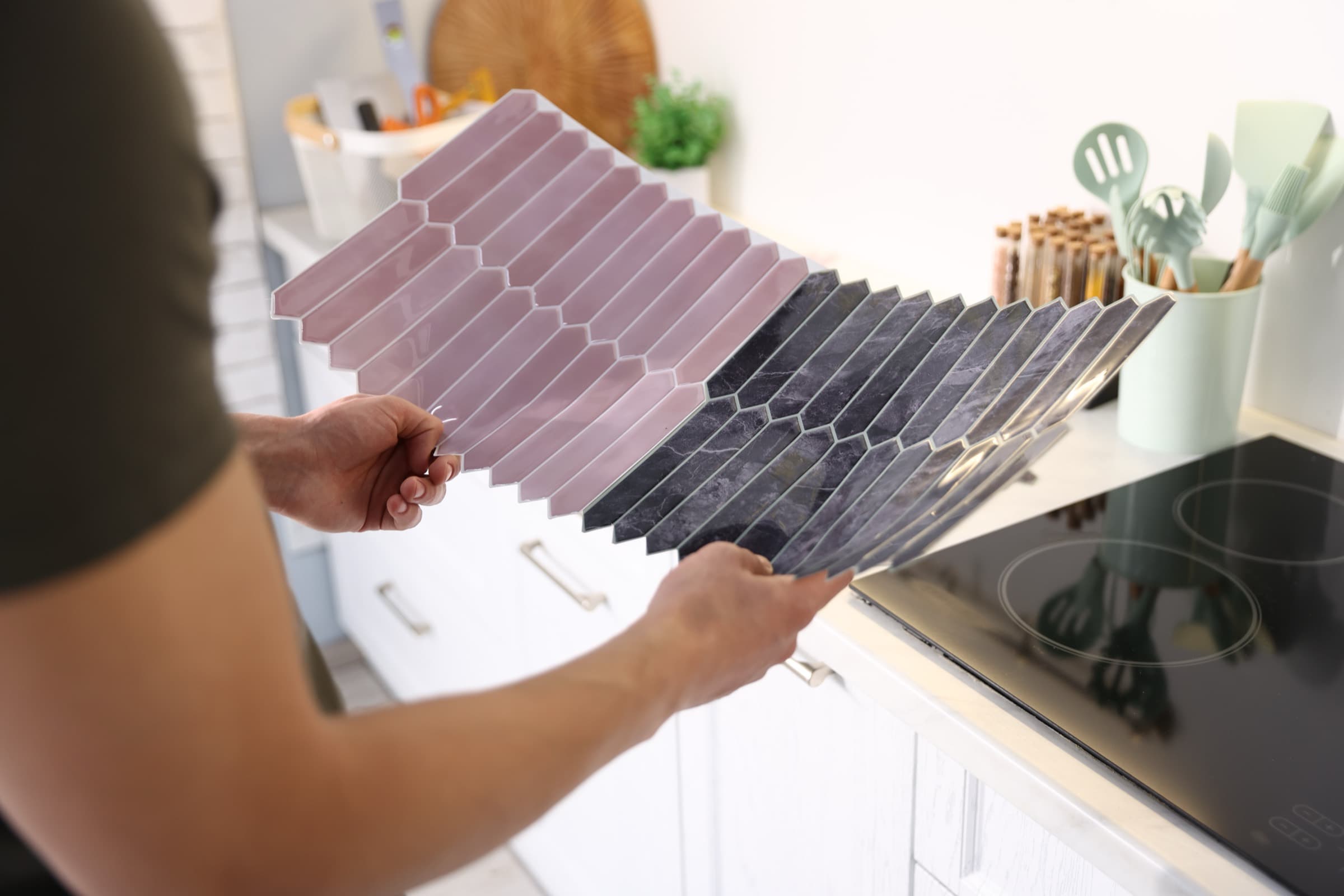
Hands holding pink and dark-marble peel-and-stick backsplash tile samples over a kitchen counter.

Renter-friendly ideas

Peel-and-Stick

The renter’s shortcut to a finished room — wallpaper, backsplash, flooring, and decor that go up with adhesive and come off without a fight.

21 ideas · each rated for deposit risk

Renter-friendly peel-and-stick products are the fastest way to change how a rental looks without tools, paste, or a single hole in the wall. It is no niche trend either: peel-and-stick now draws around 1.6 million searches a month and has grown about 60% over the past year, as more renters and homeowners reach for reversible upgrades. The phrase covers a lot of ground, though. Peel-and-stick is an adhesive method, not one product, and renters use it on walls, backsplashes, floors, cabinets, and more. What removes clean off one surface can pull paint or leave residue on another, so the deposit math changes depending on what you are sticking and where. A peel-and-stick accent wall in a cured, smooth-painted bedroom is about as low-risk as decor gets. Peel-and-stick floor tile bonded straight to a subfloor is a different story. The goal of this page is to help you tell those situations apart before you order.

Below, we break down the main peel-and-stick categories renters reach for: wallpaper, tile and backsplash, flooring, and decor. For each, we cover what it is best for, how it behaves on the wall or floor, and how risky it is for your security deposit, with a clear rating on every option. Then you can explore real renter-tested ideas pulled from actual rentals, so you can see how these solutions look in a lived-in space before you commit.

Most peel-and-stick upgrades are fully reversible and need no landlord approval. The few that bond harder, or that go on porous surfaces like bare concrete, are flagged so you know to test first. If you came here for wallpaper specifically, our renter-friendly wallpaper guide goes deeper on patterns, types, and clean removal.

How we rate: every idea gets a deposit-risk level so you know what’s reversible. See our method →

Where peel-and-stick works for renters

Peel-and-stick spans four very different surfaces, and the deposit risk climbs as you move from walls to floors. Here’s the quick map — tap through to the full guide for whichever surface you’re tackling.

01Low deposit risk

Peel-and-stick wallpaper

The most popular entry point: self-adhesive vinyl for accent walls and alcoves. On a smooth, cured wall it goes up in panels and peels off clean. The biggest variables are wall texture and fresh paint.

Best for: accent walls and renters who want the most reversible upgrade on the board.

Explore wallpaper ideas
02Medium deposit risk

Peel-and-stick tile & backsplash

Gel and vinyl tiles that mimic a tiled backsplash behind a stove or sink. Great over existing smooth tile or painted drywall, but adhesive can bond hard over time and grout-look films need a clean, dry, grease-free surface to release well.

Best for: kitchen and bathroom backsplashes you want to look tiled without the tile.

Explore backsplash ideas
03Medium deposit risk

Peel-and-stick flooring

Self-adhesive vinyl planks and tiles that lay over an existing floor. The highest-effort, highest-stakes peel-and-stick: adhesive on a sub-floor can be the hardest to remove cleanly, so many renters choose loose-lay or floating versions over true stick-down.

Best for: dated rental floors — with a careful read of your lease first.

Explore flooring ideas
04Low deposit risk

Peel-and-stick decor & accents

The low-commitment end: contact paper for shelves and furniture, hooks, decals, and trim. Cheap, forgiving on non-porous surfaces, and the easiest to remove. Ideal for testing a look before committing a whole wall or floor.

Best for: fast, fully reversible personality on shelves, furniture, and nooks.

Explore decor ideas
The quick rule: changing a wall → start with wallpaper. Kitchen or bath → backsplash tile. Tired floors and a flexible lease → flooring. Just want a quick hit of personality → decor and contact paper.

Free Renter’s Decor Toolkit

Renter-safe, deposit-friendly ideas, plus our toolkit, straight to your inbox.

No spam. Unsubscribe anytime.

Peel-and-stick FAQ

Are peel-and-stick tiles renter-friendly?
Most are, with one caveat: it depends on the surface underneath. Over existing tile, glass, or sealed counters, peel-and-stick tiles remove cleanly with a little heat and leave little behind. On painted drywall the adhesive is stronger than wallpaper and can lift paint when you take it down, so a hidden test patch first is smart. Choose a quality vinyl or gel tile, avoid the cheapest rolls, and you can refresh a backsplash or accent wall with a high chance of a clean, deposit-safe removal.
Are peel-and-stick tiles any good, or do they look cheap?
Quality has improved a lot. Gel and thicker vinyl tiles have real dimension and a glossy finish that reads convincingly as ceramic from normal viewing distance. The cheapest flat-printed stickers are the ones that look obviously fake, especially in bright light. For durability, mid-range and premium tiles hold up well on walls and backsplashes for years. They are less suited to heavy-wear floors or constant standing water. For a rental you cannot renovate, a good peel-and-stick tile is usually well worth the modest cost.
Are peel-and-stick tiles waterproof enough for a kitchen or bathroom?
The tiles themselves are water-resistant, but the seams between them are not fully waterproof, so they are better for splash zones than soaking ones. A backsplash behind a sink or stove is a great fit. Inside a shower surround or anywhere with standing water is not, because moisture creeps behind the edges and weakens the adhesive. In bathrooms, run the exhaust fan, seal edges where you can, and keep them on drier walls. Treat them as a good-looking cover, not a true wet-area waterproofing system.
Will peel-and-stick tile stick to concrete?
It can, but concrete needs prep. The surface must be clean, completely dry, and smooth, and bare concrete is porous, so a sealer or primer helps the adhesive grab and makes later removal cleaner. Unsealed or damp concrete is the most common reason tiles lift at the edges. Test a small area first and give it a day. For basement or garage-style rental floors, a floating vinyl option that does not rely on adhesive is often the safer, more forgiving choice on concrete.
Are peel-and-stick tiles easy to remove without losing your deposit?
Usually, if you remove them with heat and patience. Warm each tile with a hairdryer to soften the adhesive, then peel slowly from a corner at a low angle. Light residue comes off with a citrus-based adhesive remover. The risk rises on painted drywall, where the adhesive can take paint with it, and on tiles left up for years. The safest setup is quality tiles applied over an already-sealed or tiled surface, removed within a reasonable timeframe rather than left indefinitely.
Is peel-and-stick vinyl flooring a good idea for renters?
It can transform a floor, but it is the riskiest peel-and-stick category for your deposit. Adhesive-backed planks and tiles bond to the subfloor and can leave residue or lift the existing finish when removed, especially over bare concrete or wood. For renting, loose-lay or click-lock vinyl that floats on top is usually the smarter move, since it lifts out clean with no glue. If you do use true peel-and-stick flooring, apply it over an existing hard floor rather than raw subfloor and keep removal in mind.
What is the best peel-and-stick backsplash or tile for renters?
The best pick is a thicker gel or vinyl tile from an established brand, applied over a smooth, sealed surface. Look for tiles rated for kitchens and baths, with a real finish rather than flat printing, and check reviews for clean removal. Subway and mosaic styles are the most forgiving to align. We rate specific options for deposit risk on our tile and backsplash pages, so you can match the look you want to the surface you have before buying.
Is peel-and-stick wallpaper renter-friendly too?
Yes, and it is the most renter-proven peel-and-stick category. On smooth, fully cured painted walls it goes up fast and usually peels off clean when you pull slowly. The risk rises on textured, flat-finish, or freshly painted walls, where the adhesive can grab paint. Because wallpaper has its own types, patterns, and removal quirks worth knowing, we cover it in depth on our renter-friendly wallpaper guide rather than repeating it all here.
Do I need landlord approval for peel-and-stick upgrades?
For most reversible upgrades, no, but it depends on your lease. Decals, contact paper, and peel-and-stick wallpaper on smooth walls are generally low-risk and rarely an issue. Anything that bonds harder or touches the floor, like peel-and-stick flooring or tile over drywall, is worth a quick heads-up, both to protect your deposit and to keep things friendly. If your lease bans alterations, a short message and a photo of the reversible product often gets a yes. When in doubt, ask and keep it in writing.

Some links on RenterFriendly.com are affiliate links. If you buy through them we may earn a small commission, at no extra cost to you. We only feature ideas our editors would use in their own rentals, and a commission never buys a spot in the grid.