The Ultimate Guide: Container Gardening for Renters
Container gardening for renters explained with real costs, deposit safe setups, vertical options, and plants that thrive on small balconies or patios.

Disclosure:Some links on RenterFriendly.com are affiliate links. If you buy through them, we may earn a small commission at no extra cost to you. We only feature products we’d use in our own rentals. See our transparency policy.
Quick Answer
Yes, container gardening is one of the safest renter-friendly ways to grow plants, herbs, flowers, and vegetables without making permanent changes to a rental. The best setup uses lightweight pots, saucers, plant stands, removable deck tiles, and freestanding privacy pieces instead of drilling, digging, or attaching anything to the property. Most small container gardens cost about $40 to $300 and can usually be removed in under an hour when it is time to move.
Overview
Container gardening for renters has quietly become the default way that apartment and rental-house tenants grow food and flowers, because nothing about it depends on owning the land underneath. Everything sits in a pot, on a tile, or inside a freestanding planter, which means everything also leaves with you when the lease ends.
If you rent, you have probably been told to wait on the gardening dream until you buy a house. That advice is outdated. The pot, soil, drip tray, and plant are all your property. The deck, railing, and stucco are not. Keep those two categories separate and a balcony garden becomes one of the safest renter projects you can do.
There are three practical reasons it matters more for renters than homeowners. Your security deposit stays intact because you are not drilling into anything. Portable setups follow you across moves, which is normal for renters cycling leases every one or two years. And container plants tend to have fewer pest and soil problems than in-ground beds, because you control the soil from the first scoop.
Step-by-Step
1. Audit your light at three times of day
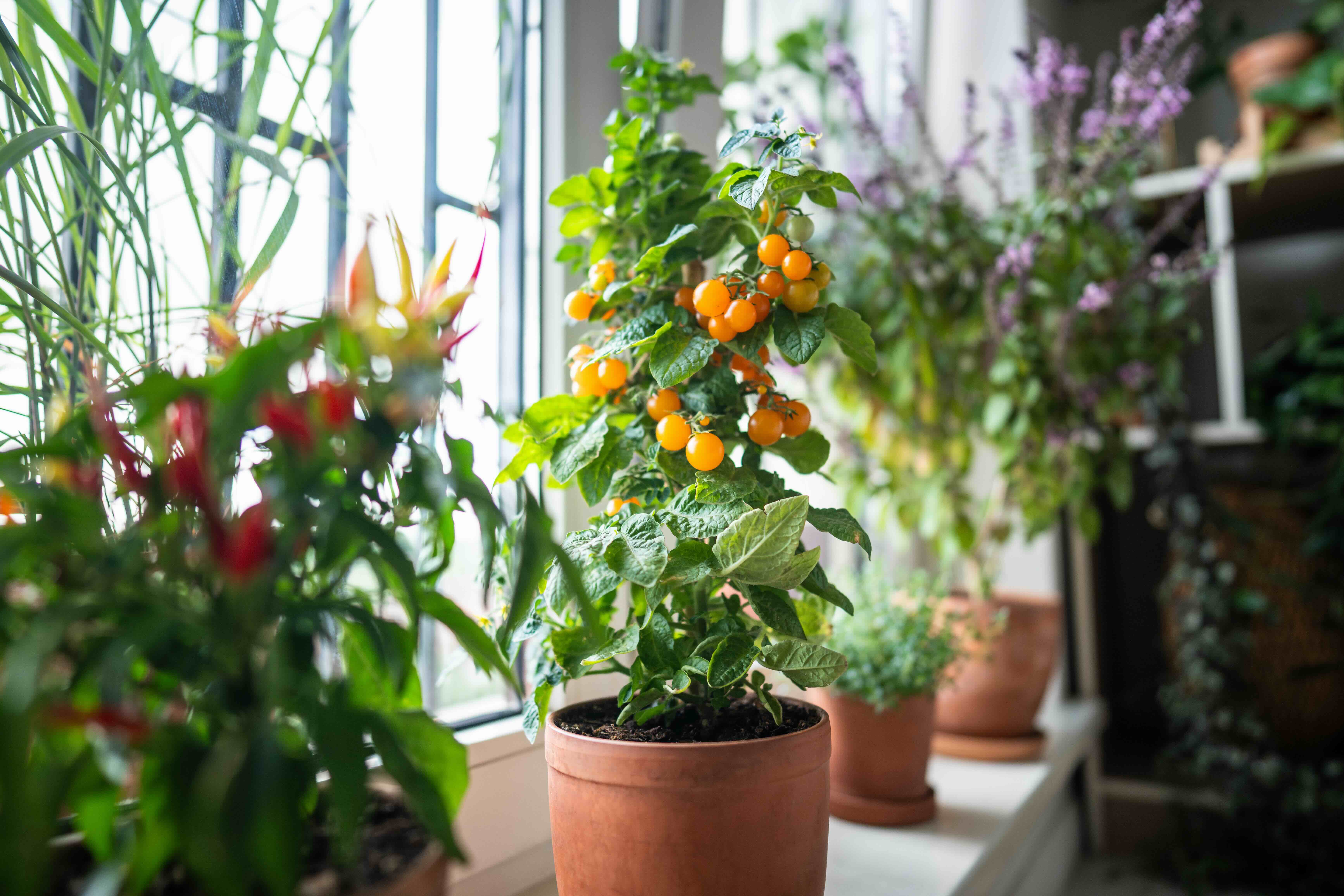
Stand in your outdoor space at roughly 9 a.m., 1 p.m., and 5 p.m. and note how many hours of direct sun you actually get. Most fruiting vegetables need 6 or more hours of direct sun. Leafy greens and most herbs do fine with 4 to 5 hours. North-facing balconies or shaded patios are best for shade-tolerant picks like ferns, hostas, impatiens, mint, and parsley.
Enjoying this? Get more renter-safe ideas
Join the list for damage-free upgrades and our free Renter’s Decor Toolkit.
No spam. Unsubscribe anytime.
Renter note: also check whether water can drip off your balcony onto the unit below. Many leases prohibit this, even if the rest of your setup is allowed.
2. Match container size to plant size
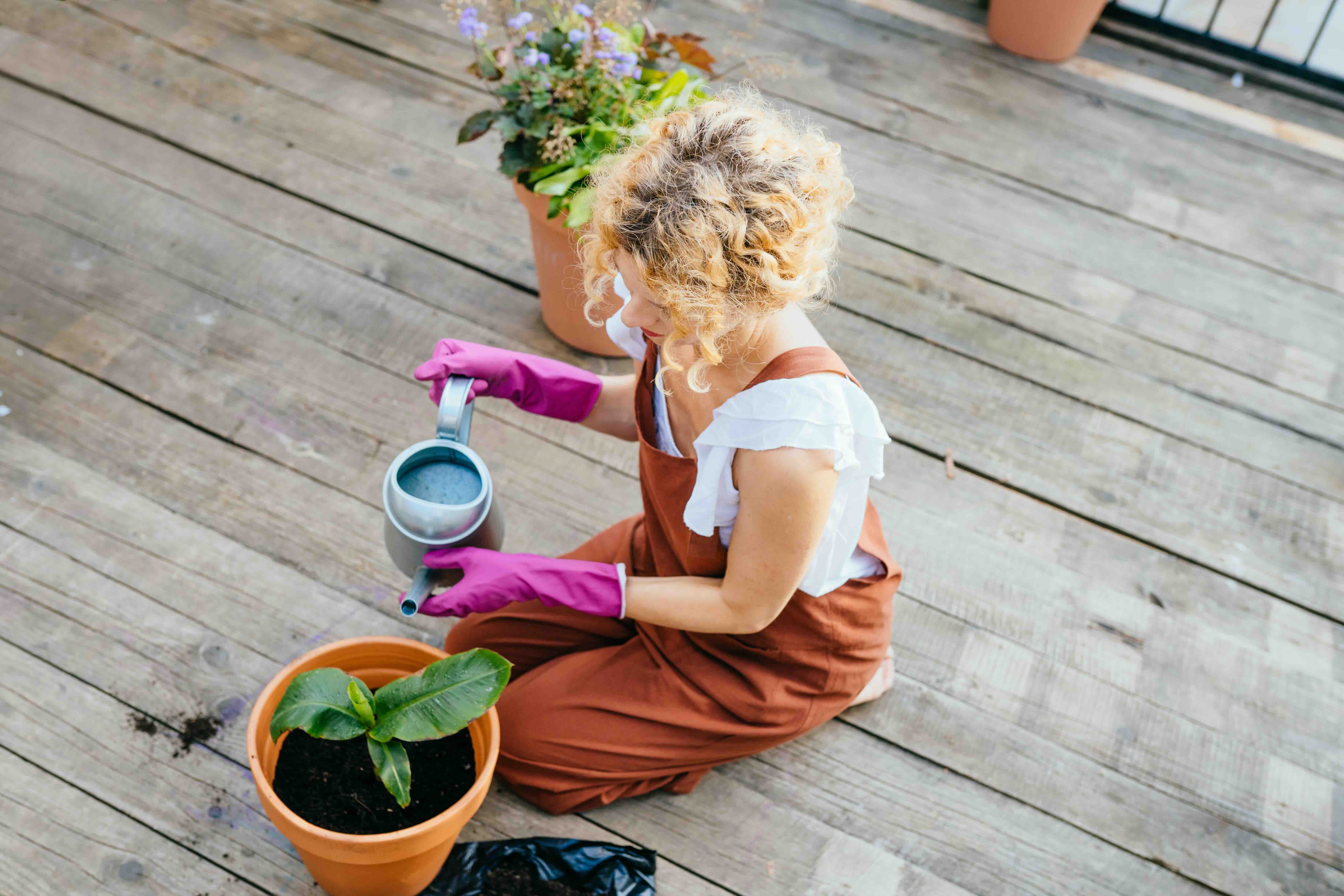
Undersized pots are the number one reason beginner container gardens fail. Use this as a starting guide:
Plant type | Minimum container size | Typical depth |
|---|---|---|
Lettuce, spinach, herbs | 1 to 2 gallons | 6 to 8 inches |
Peppers, bush beans, compact flowers | 3 to 5 gallons | 10 to 12 inches |
Tomatoes, squash, dwarf fruit | 7 to 15 gallons | 14 to 18 inches |
Fabric grow bags in the 5 to 10 gallon range usually run $3 to $10 each and weigh almost nothing when empty, which makes them ideal for upper-floor balconies.
3. Choose a renter-safe container setup
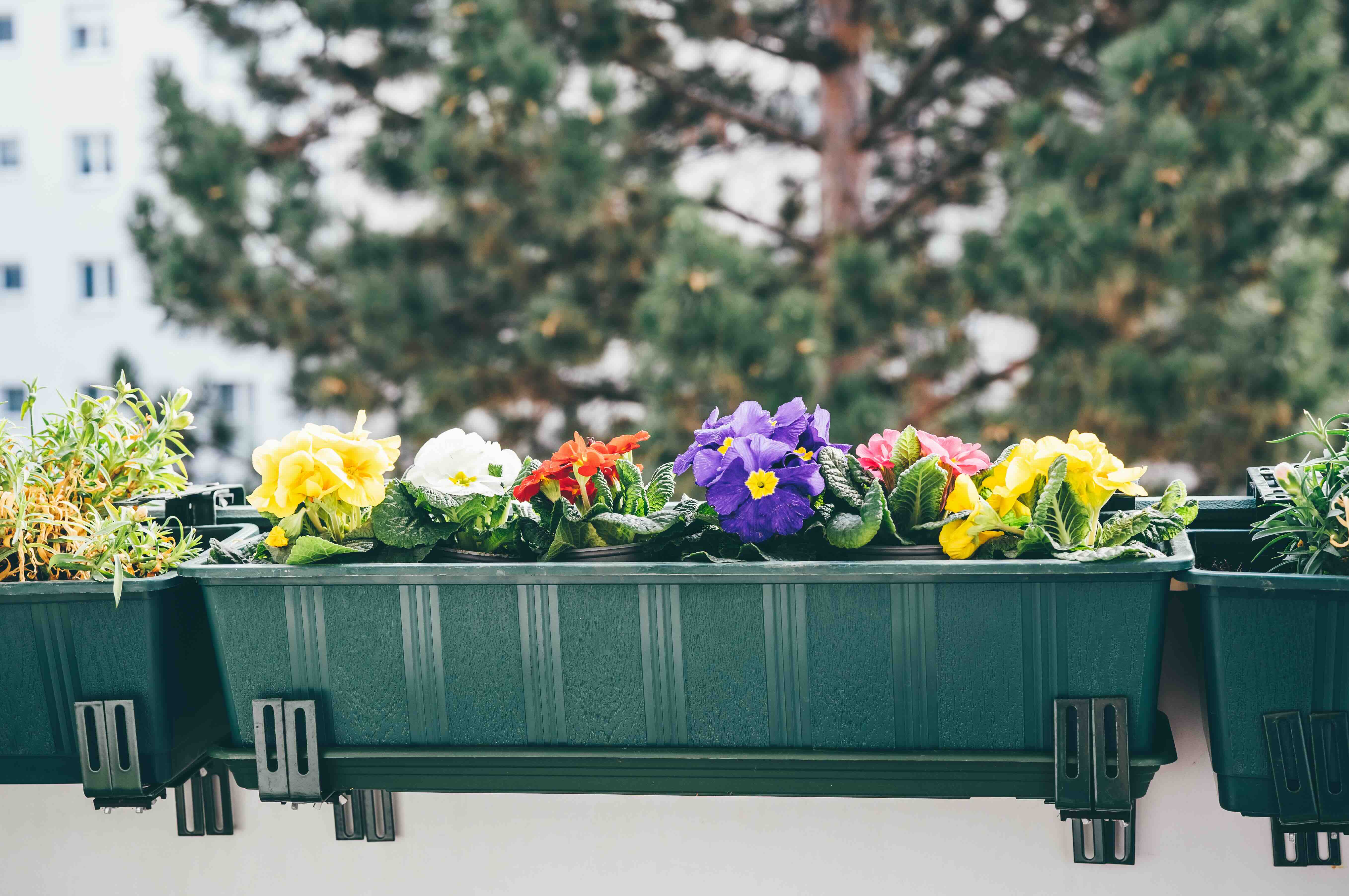
Freestanding pots on the floor are the lowest-risk option. For height, use plant stands, tiered shelves, or a rolling cart instead of mounting anything to the wall. If you want railing planters, look for the hook-over style with adjustable brackets so no screws touch the railing.
Renter note: avoid suction-cup railing mounts on textured concrete or stucco. They release with no warning.
4. Use real potting mix
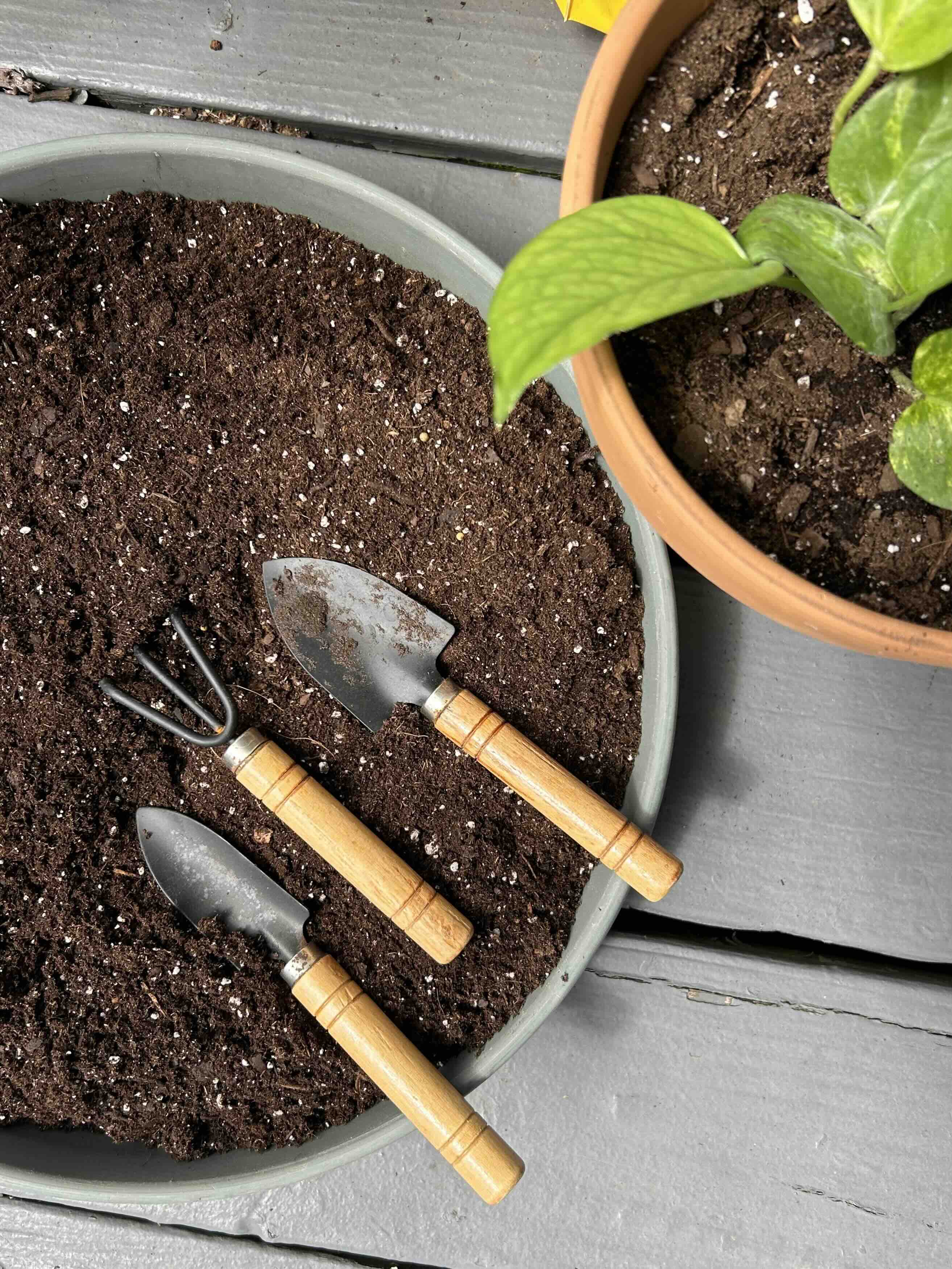
A 1.5 to 2 cubic foot bag of potting mix runs about $15 to $25 and fills two to three medium pots. Garden soil scooped from the yard is too dense for containers and often carries weed seeds and pests. Look for a mix labeled for containers, ideally with perlite for drainage.
5. Always put a saucer underneath
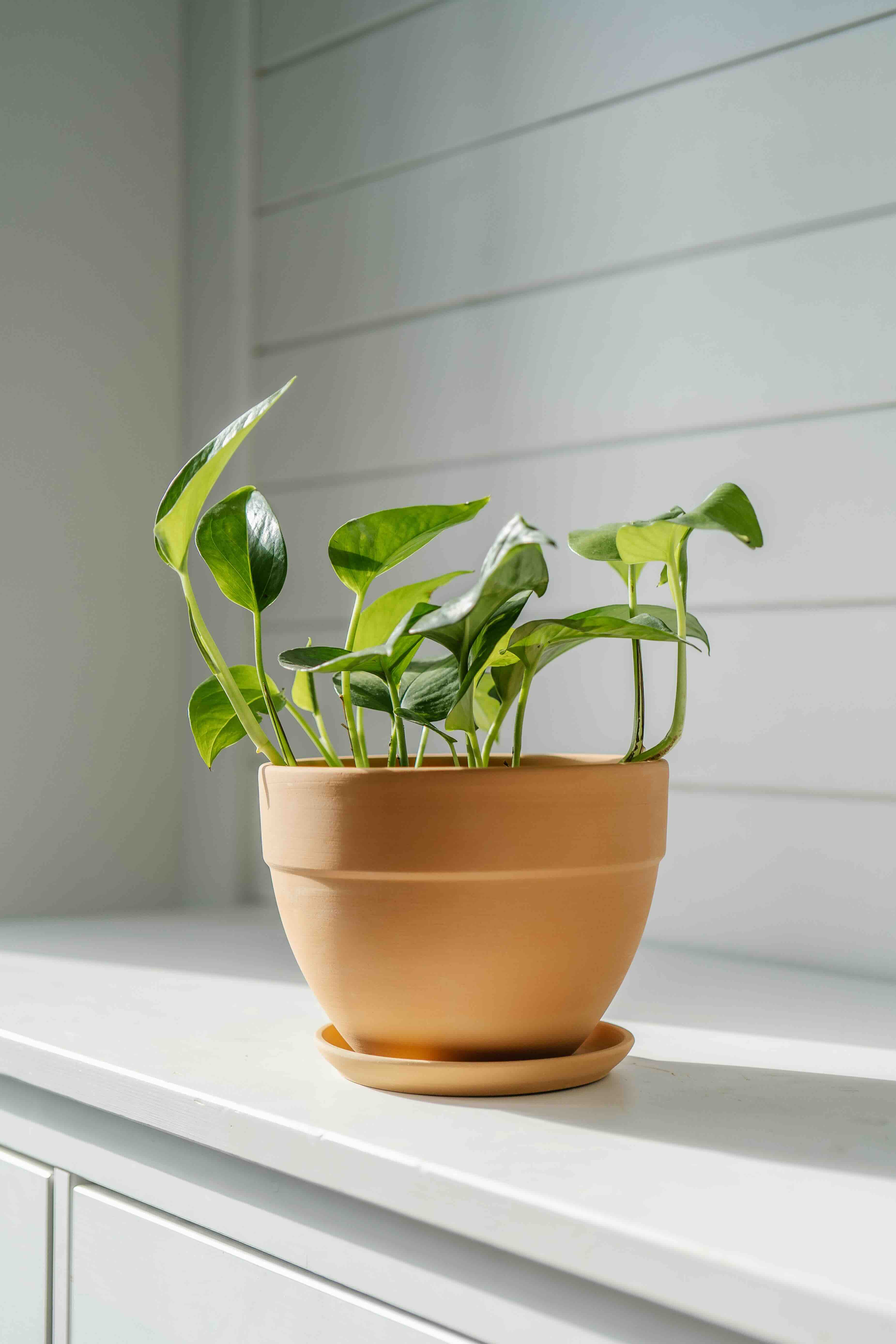
This is the step renters skip and regret most. Water and fertilizer runoff stain wood, concrete, and composite decking. Plastic saucers cost about $1 to $4 each, and pond-liner squares work for irregular shapes. Budget one saucer per container, no exceptions.
6. Plant, water, and label
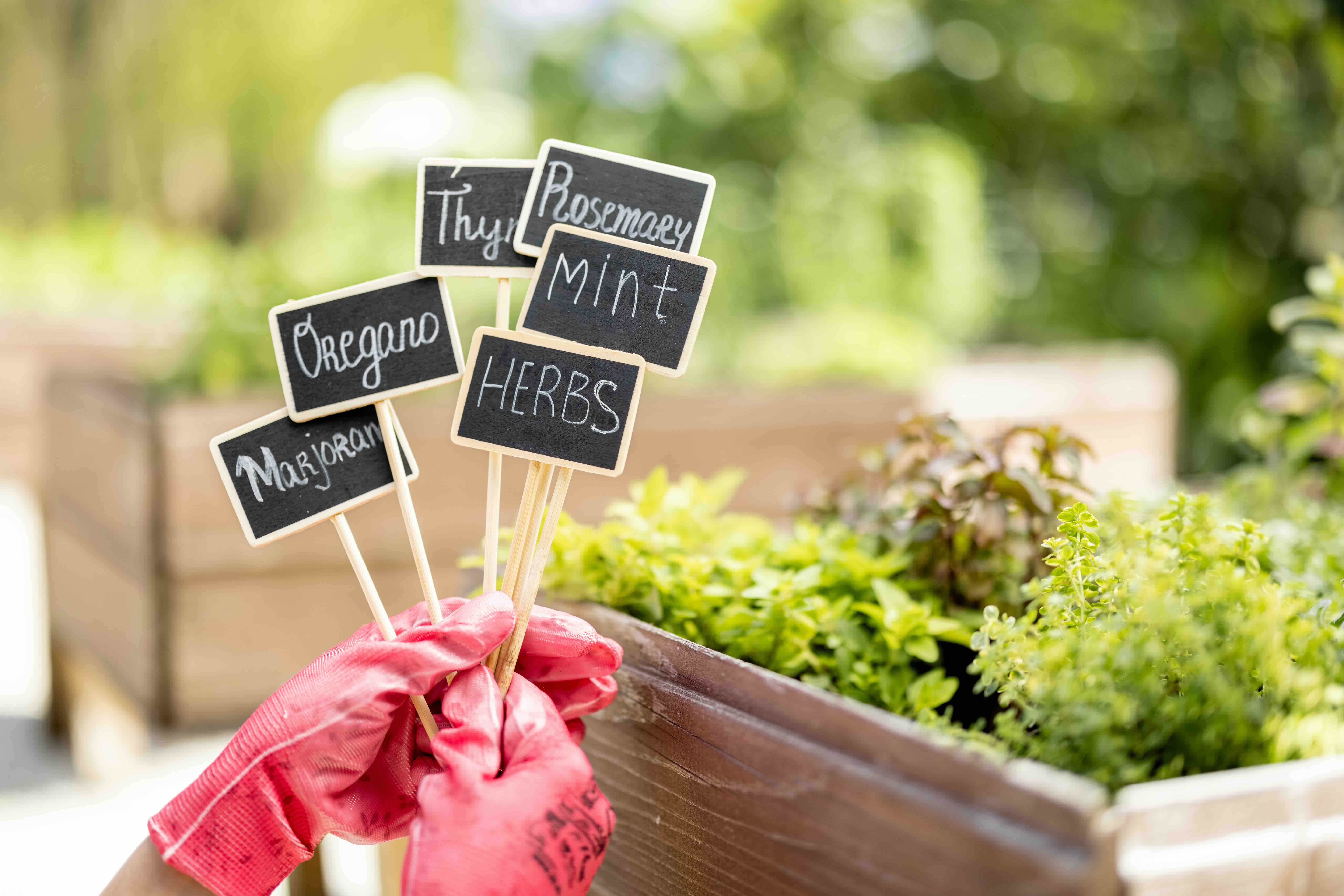
Soak the soil thoroughly the first time. After that, water based on the plant and weather. In hot summer months, container plants often need water once or twice a day. Stick a finger about 1 inch into the soil; if it feels dry, water it. Cheap plant labels prevent the awkward moment in week three when you cannot remember which seedling is basil and which is mint.
7. Plan your teardown before move-out
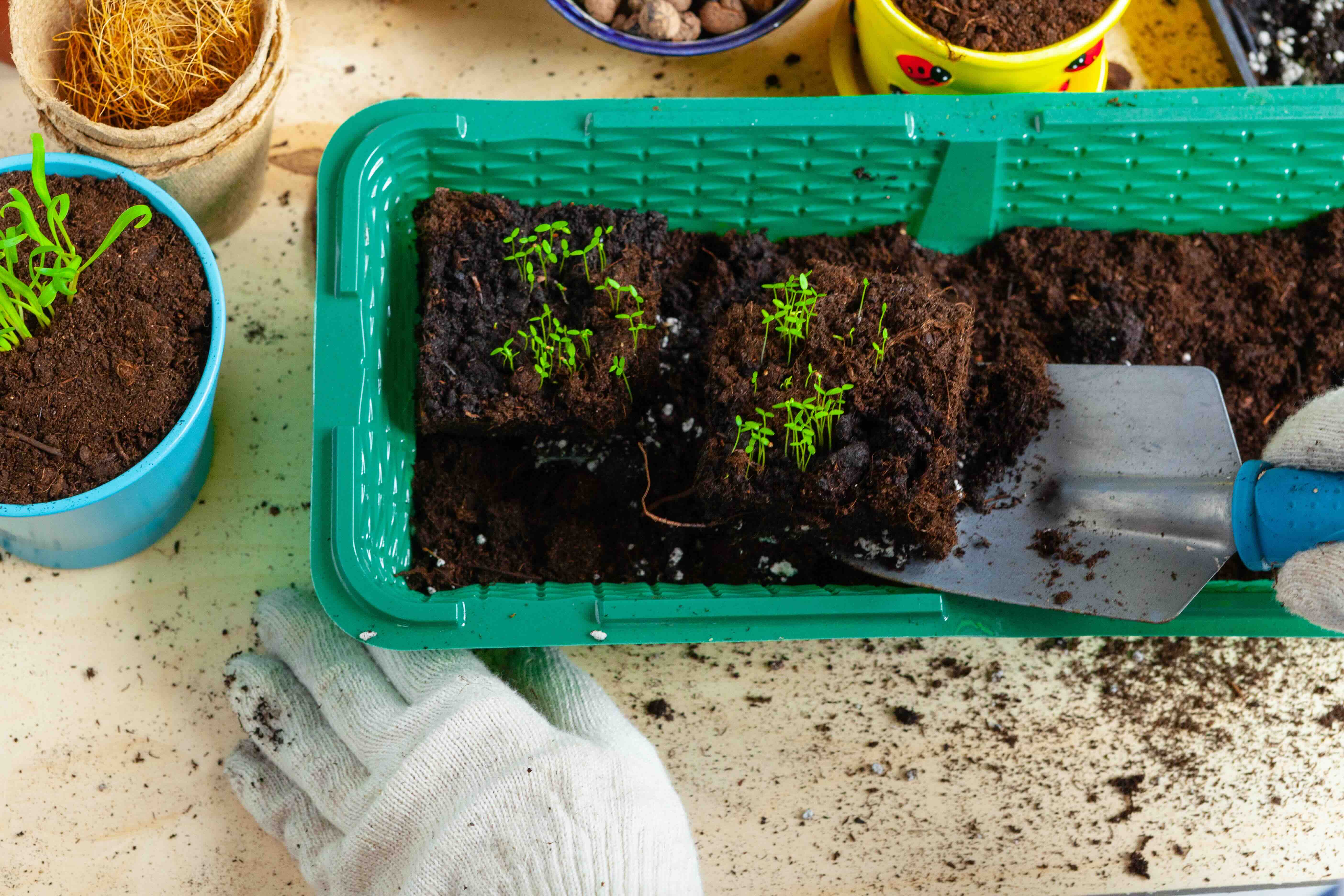
A renter-safe container garden should disassemble in under 2 hours per zone. Stack pots, bag soil for transport, rinse any rust rings off the deck, and wipe saucers before they pick up mineral stains. Photograph the area after teardown for your records.
Renter Considerations
Deposit safety: the biggest risks are water staining on flooring, rust rings from metal stands, fertilizer runoff on concrete, and holes from drilled mounts. Saucers, plastic feet under metal stands, and freestanding designs prevent almost all of these.
Removability: every part of the setup should come apart in under 30 minutes per zone. Tension rods, hook-over railing planters, freestanding trellises, and stacking vertical towers all qualify. Anything bolted, glued, or screwed in does not.
Surface compatibility: composite decking and sealed concrete tolerate containers well with saucers underneath. Real wood decks are the most vulnerable to staining and rot. Carpeted balconies (yes, those exist on some older buildings) need a waterproof base layer like rubber mat or vinyl tile under every pot.
Lease concerns: re-read your lease for clauses on alterations, exterior decoration, balcony weight limits, and water runoff onto neighbors. Some HOAs and apartment complexes also restrict railing planters that face the street.
Landlord approval triggers: send a short email if you plan to drill into walls or railings, install a permanent vertical garden, hang anything overhead, set up a structure taller than the railing, or store enough heavy planters to push balcony load limits. Mention that everything will be removed at move-out and offer photos.
Test in a small spot first: before scaling up, place one pot in your chosen location for 10 to 14 days. Watch for staining, drainage issues, sun exposure changes, and complaints from neighbors below. Two weeks is usually enough to spot problems before they multiply.
Cost, Tools, and Materials
A realistic starter budget for a small balcony or patio:
Item | Typical cost | Notes |
|---|---|---|
3 to 5 plastic or fabric pots (3 to 7 gallon) | $15 to $50 | Fabric grow bags are the cheapest |
Potting mix (2 bags) | $30 to $50 | Skip cheap topsoil |
$5 to $20 | Essential for deposit safety | |
$10 to $40 | Seeds stretch the budget further | |
$15 to $30 | One-time purchase | |
Optional railing planter or vertical tower | $25 to $120 | Choose hook-over or freestanding |
Estimated total | $100 to $310 | Lower if you reuse containers |
The actual tool list is short: a hand trowel, a watering can or hose attachment, gloves, and pruning snips. A small moisture meter ($8 to $15) helps beginners avoid the over-and-under-watering loop. A bag of small smooth river rocks ($5 to $10) adds weight to lightweight pots so they do not tip on windy upper floors.
Pros and Cons
Pros | Cons |
|---|---|
Fully portable and lease-friendly | Pots dry out faster than in-ground beds |
No yard, mower, or in-ground digging required | Higher cost per plant than ground gardening |
You control soil quality from day one | Heavy pots are hard to move once full of wet soil |
Scales up or down with your space and budget | Limited root space caps what you can grow |
Works on balconies, patios, and rooftops | Balcony weight limits restrict large planters |
If you are choosing a container style, a quick comparison:
Container type | Best for | Typical cost (each) | Renter notes |
|---|---|---|---|
Beginners, cold climates | $5 to $25 | Lightweight, easy to move | |
Tomatoes, peppers, root crops | $3 to $10 | Lightest weight, dry out fastest | |
Decorative, indoor-outdoor | $20 to $80 | Heavy when full, can crack in freeze | |
Travelers, busy renters | $25 to $90 | Reduce watering to 1 to 2 times per week | |
Patios with ground space | $80 to $250 | Mid-back-friendly, no ground contact |
Common Mistakes
Skipping the drip saucer
This is the single biggest cause of stained decks and unhappy landlord emails. Always use a tray, even under a pot you think will not leak.
Using garden soil instead of potting mix
Soil from the yard compacts in pots, drains poorly, and often kills seedlings within weeks. Bagged potting mix is one of the few places where the cheapest option is the wrong option.
Buying pots that are too small
A 1-gallon pot will not support a tomato plant past midsummer. Match the pot to the mature plant size, not the seedling.
Drilling into stucco, brick, or siding
This is a deposit risk and often a lease violation. Use freestanding stands, hook-over rail brackets, or tension-mounted vertical systems instead.
Ignoring weight
A 15-gallon pot full of wet soil can weigh 100 to 150 pounds. Many residential balconies have published live-load limits in the 40 to 60 pounds per square foot range. Cluster heavy pots near the wall, not at the railing edge.
Forgetting wind on upper floors
Tall plants in lightweight pots tip over above the second story. Add gravel to the saucer, weight the base, or stake the plant to the railing with soft ties.
Letting water drip onto neighbors below
Even renters who like gardening do not like brown water dripping on their patio chairs. Use saucers deep enough to catch full waterings, and empty them after heavy rain.
Beyond the Basics: Other Renter Garden Ideas to Consider
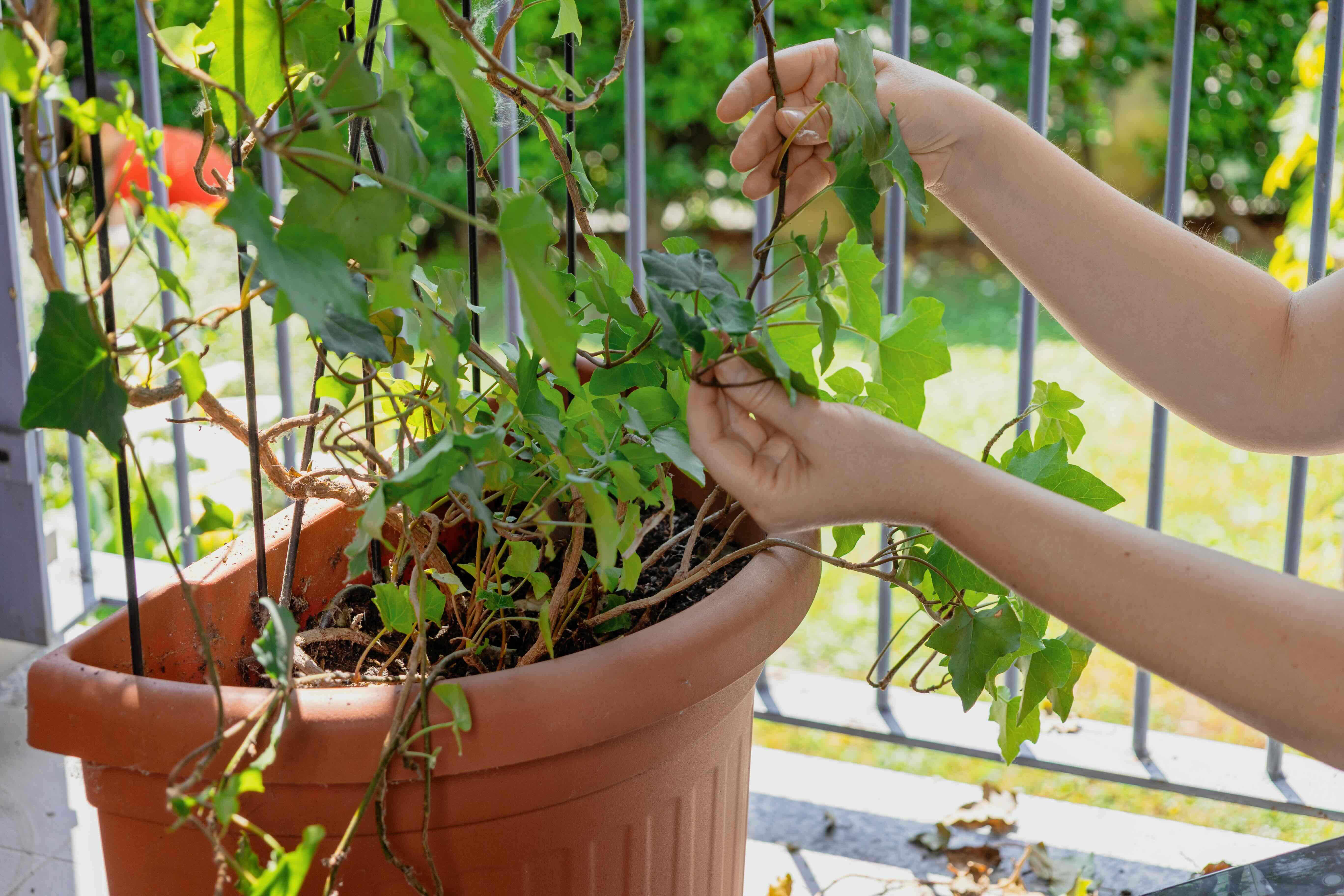
Renter friendly garden ideas: look beyond the standard pot. Magnetic herb planters on metal balcony rails, freestanding trellis arches anchored by weighted pots, and tension-rod hanging planters between two walls all qualify as renter friendly garden ideas because they leave zero permanent marks. Most setups in this category run $20 to $80 per zone.
Renter friendly vertical garden: a renter friendly vertical garden uses freestanding stackable systems like the GreenStalk tower, ladder planters, or tension-rod hanging pockets to multiply growing space without wall holes. A 3 to 5 tier vertical tower typically holds 20 to 30 plants in a 2-foot footprint and costs $80 to $200, which is often cheaper per plant than buying that many individual pots.
Renter friendly garden tiles: renter friendly garden tiles are interlocking deck tiles in wood, composite, or rubber that snap together over concrete or worn flooring. They sit on top, lift out at move-out in under an hour for a small balcony, and protect the surface underneath. Expect $3 to $8 per square foot, with a 40 to 50 square foot balcony costing $120 to $400 to cover.
Renter friendly garden gate: for ground-level patios, a renter friendly garden gate uses freestanding gate panels or trellis arches anchored with weighted planters rather than ground stakes or fence posts. They define the entrance to your space without altering the building. Lightweight metal arches start around $40, and weighted bamboo gate panels run $80 to $200.
Renter friendly garden privacy: renter friendly garden privacy is best built with freestanding bamboo or reed roll panels, tall ornamental grasses in 7 to 10 gallon pots, and lattice screens with weighted bases. A 6-foot freestanding privacy screen typically runs $40 to $150 and blocks the most common balcony sight line. Stack two screens in an L-shape for corner balconies.
Final Thoughts
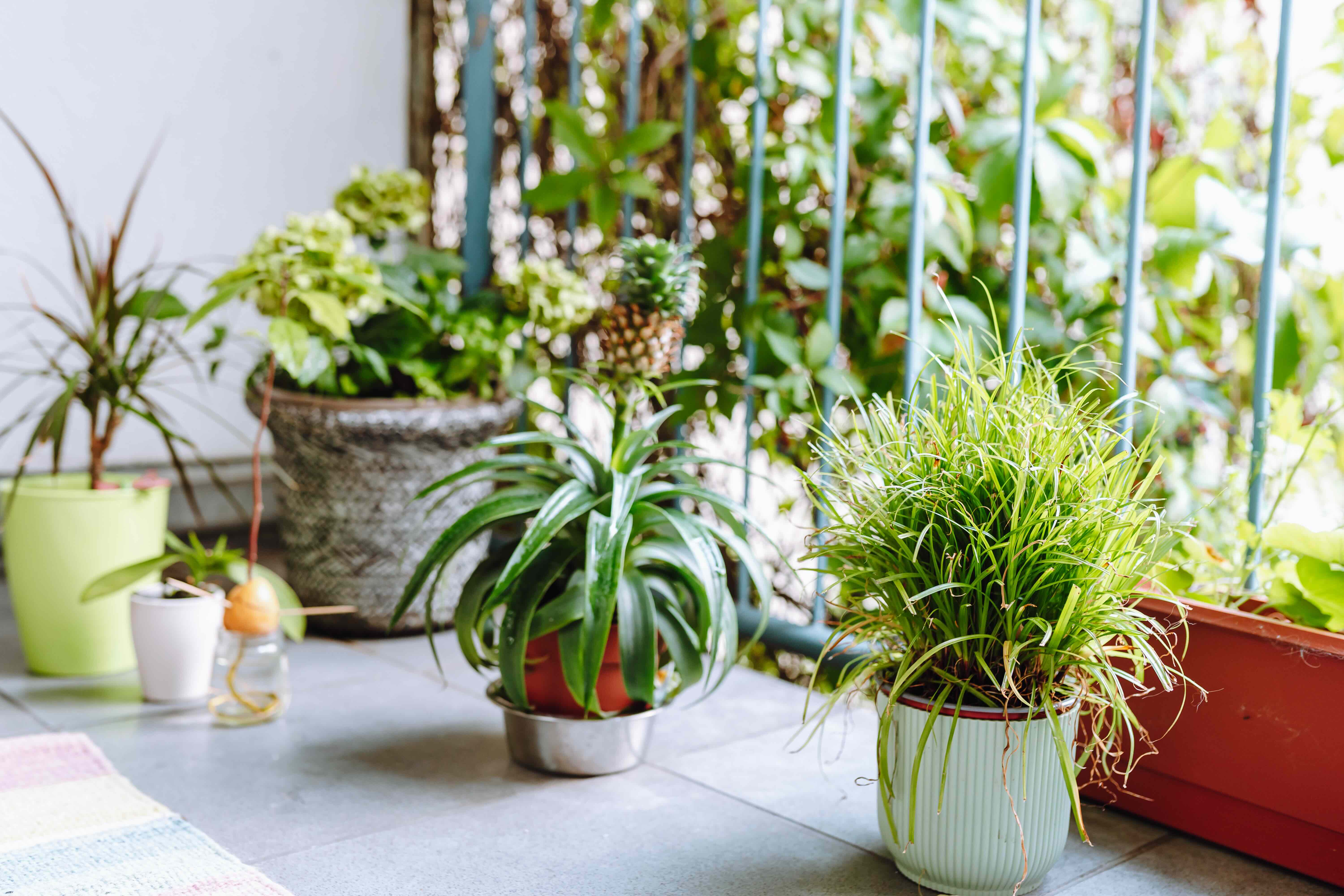
Start with three pots, one bag of potting mix, and two plants you actually want to eat or look at every day. That is the entire first move. Live with that setup for two weeks before adding anything else. You will quickly learn which corner of your balcony bakes by 2 p.m., how often you can realistically water, and whether your lifestyle supports edible plants or favors low-maintenance flowers.
If your building has strict rules, lean toward the most portable end of the spectrum: fabric grow bags, hook-over railing planters, freestanding privacy screens, and snap-together garden tiles. If your landlord is flexible, you have more room to experiment with vertical towers, larger planters, and freestanding gate panels.
You do not need to own property to grow something worth eating or looking at. You need a sunny corner, a few good pots, and the discipline to put a saucer under every one of them. Today, do one thing: measure your usable outdoor space and count the hours of direct sun. Everything else builds on that number.
Sources & References
- [1] USDA Plant Hardiness Zone Map - U.S. Department of Agriculture
- [2] Growing Vegetables in Containers - University of Maryland Extension
- [3] Outdoor Water Use in the United States - U.S. Environmental Protection Agency
- [4] The Art of Container Gardening - Penn State Extension
- [5] Growing Tomatoes in Containers - Clemson Cooperative Extension Home and Garden Information Center


